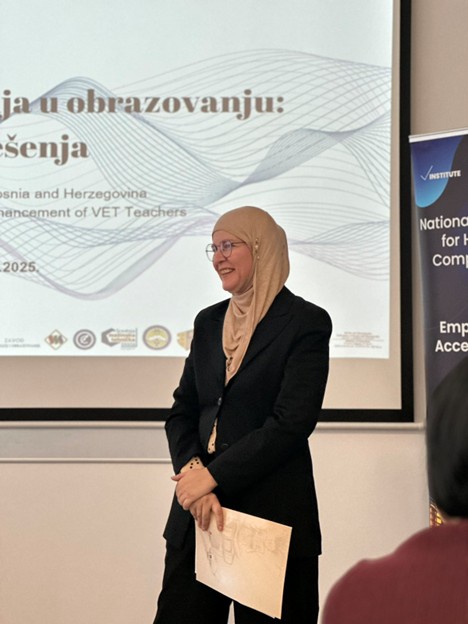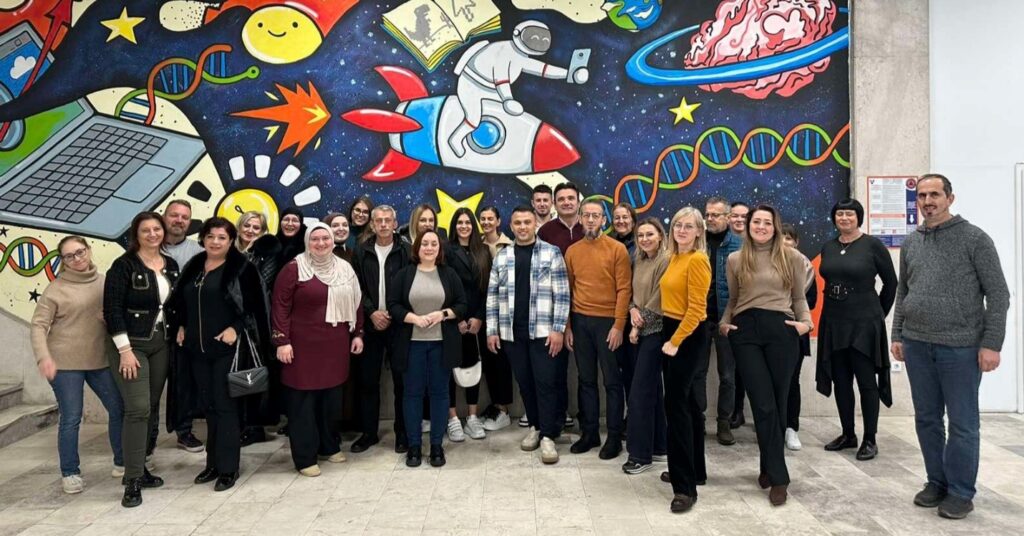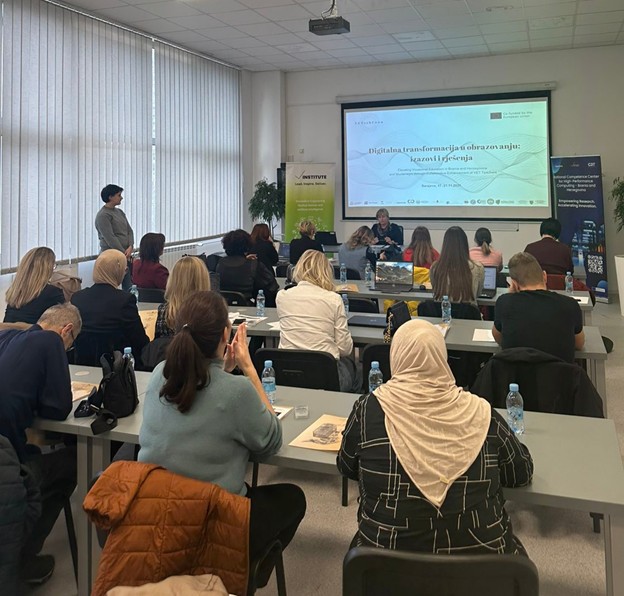
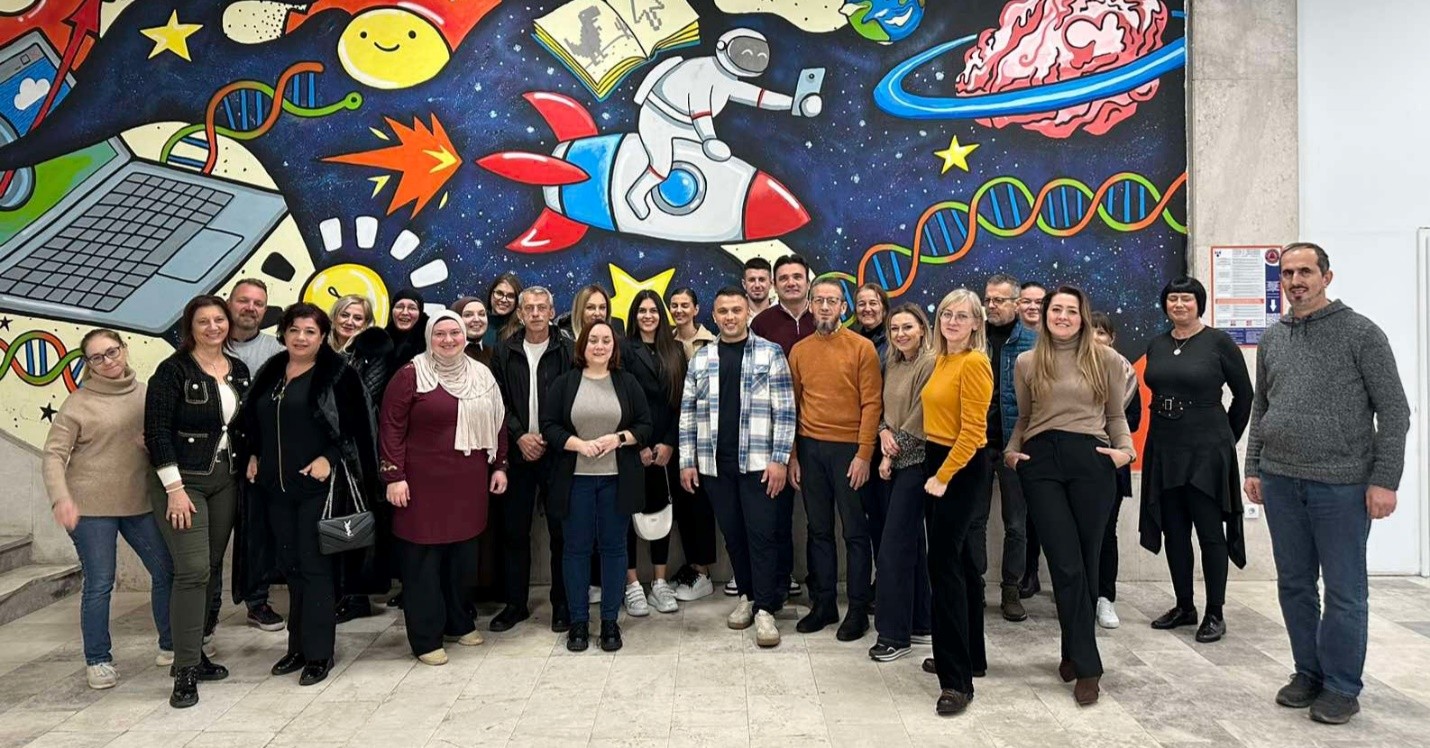
As part of the two-year Erasmus+ project Elevating Vocational Education in Bosnia and Herzegovina and Montenegro through Collaborative Enhancement of VET Teachers – VETechConn, a workshop titled “Digital Competence in Education: Building Foundations for Contemporary Teaching” was held at the Center for Advanced Technologies in Sarajevo from November 17 to 19.
The Pedagogical Institute Zenica, one of the key partners in this significant regional initiative, actively contributes to strengthening the capacities of vocational education teachers through collaboration with institutions from Bosnia and Herzegovina, Montenegro, Croatia, and Slovenia. Project partners include: Verlab Research Institute for Biomedical Engineering and Artificial Intelligence, Sarajevo, Algebra University College, Zagreb, Public Institute Cene Stupar – Center for Education, Ljubljana, Ljudska univerza – Institute for Education and Culture, Rogaška Slatina, Center for Vocational Education, Montenegro, University “Džemal Bijedić” of Mostar, Institute for the Development of Pre-University Education of Sarajevo Canton, Pedagogical Institute of Bosnian-Podrinje Canton Goražde, Institute for Upbringing and Education, Široki Brijeg, Secondary Mechanical Technical School, Sarajevo, Secondary School Center Vogošća, Secondary Vocational School, Nikšić, Secondary Electrotechnical School “Vaso Aligrudić”, Podgorica and Pedagogical Institute Zenica.
The workshop also welcomed representatives from secondary schools in the Zenica-Doboj Canton: Mixed Secondary School Zenica, Mixed Secondary School Tešanj, MSŠ “Hazim Šabanović” Visoko, Technical School Zenica, and Secondary Technical School Zavidovići.
Throughout the three-day workshop, participants engaged with current themes and innovative approaches in education, including:
• Development of teachers’ digital competencies
• Sustainability and green practices in schools
• Using Generative Artificial Intelligence (AI) in the teaching process
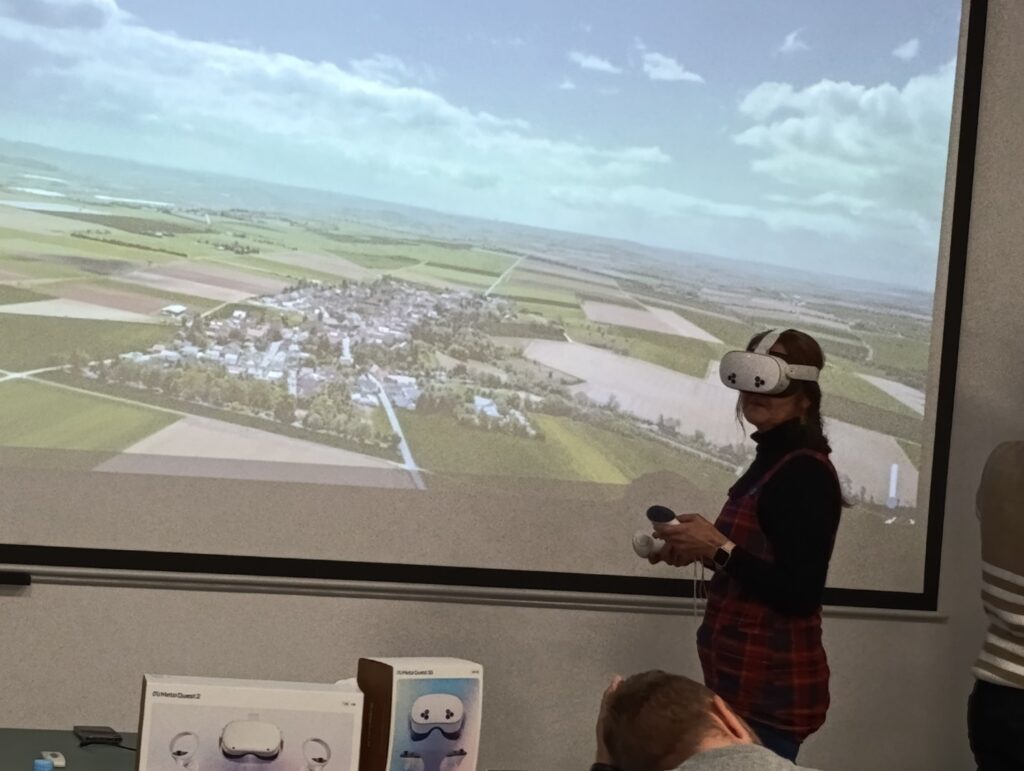
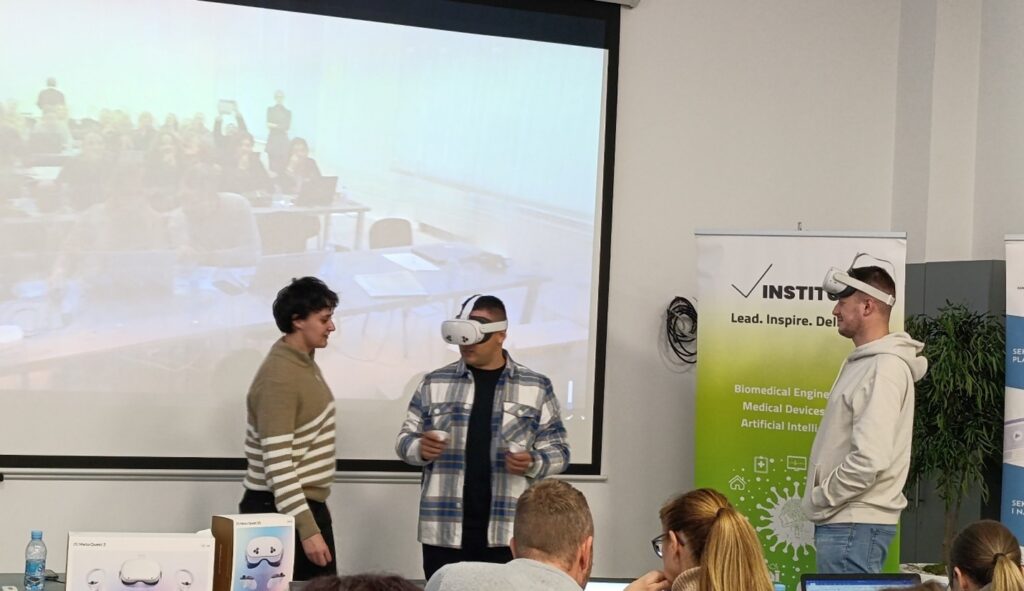
• Innovative Teaching with Virtual Reality
• Digital Tools and Platforms for Teaching and Learning
• CAD design and 3D printing for vocational education
• Integration of the UN’s 2030 Sustainable Development Goals into teaching.
The workshops aimed to enhance vocational secondary education by integrating digital technologies and fostering modern teaching competencies. Through practical and interactive sessions and experience sharing, participants contributed to a collective vision for shaping education that meets the challenges of the future.