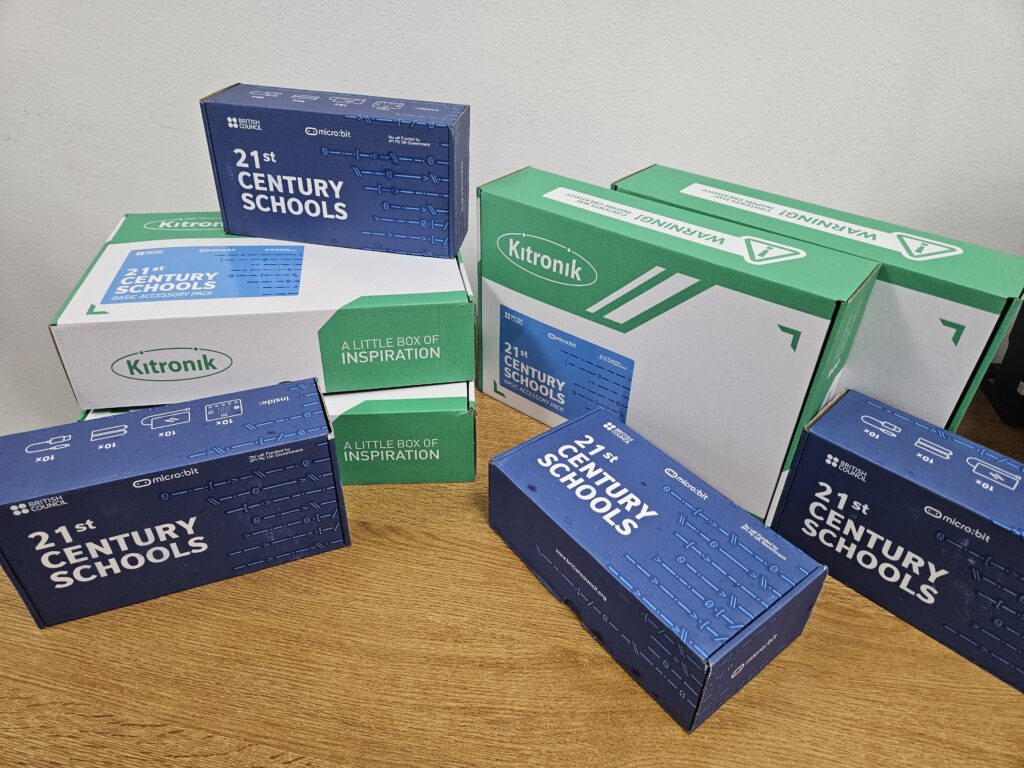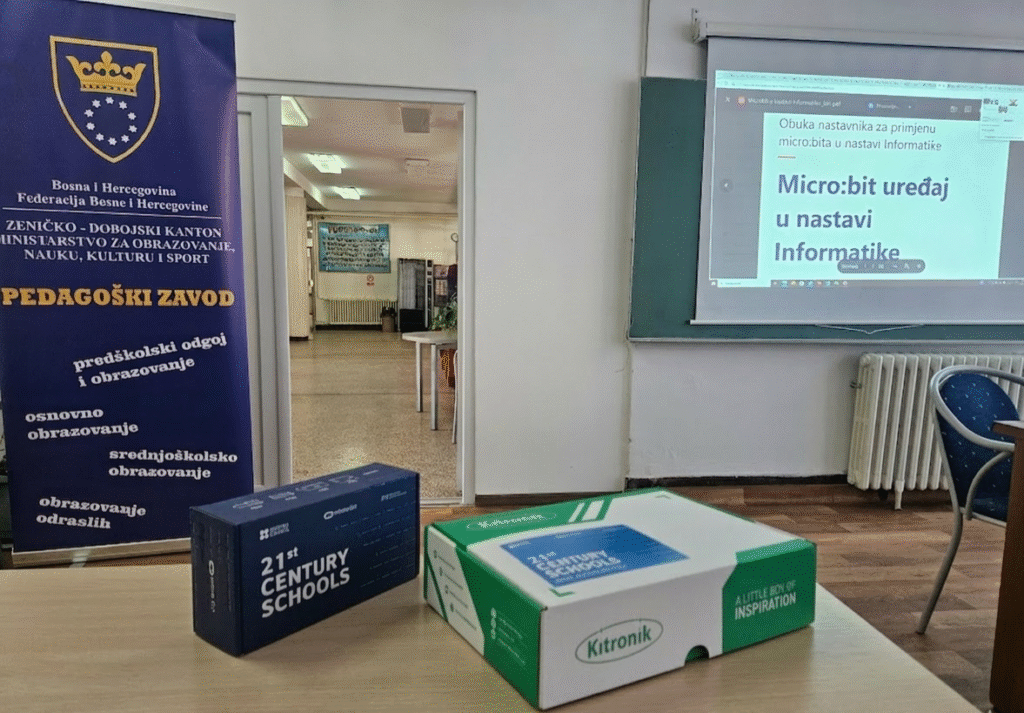
Thanks to the successful cooperation of the Zenica Pedagogical Institute and the international organization British Council, 40 primary schools from the area of the Zenica-Doboj Canton were equipped with modern Kitronic sets and Micro:bit devices. The equipment was awarded to schools whose informatics teachers participated in the two-day seminars “Application of micro:bit in the teaching of informatics and the basics of applying AI in teaching” organized in December 2025 and March 2026, which ensured that the theoretical knowledge of the teachers gets practical application in the classrooms.
This significant donation was realized on the basis of the previously signed Memorandum of Understanding between the Zenica Pedagogical Institute and the British Council. This document defines joint work on improving the educational process and providing support in the implementation of new curricula, with a special focus on the development of critical thinking, problem solving and digital literacy among elementary school students.
Each of the 40 schools received an equipment package that includes:
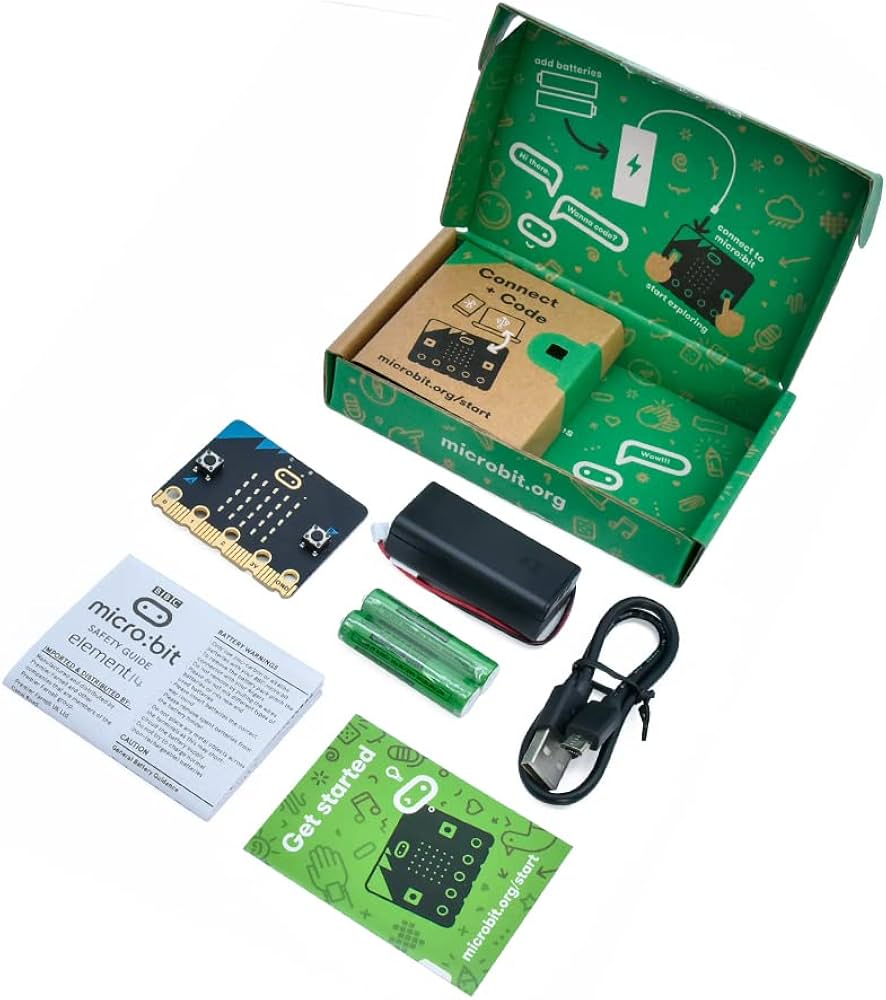
* 10 Micro:bit V2 devices (improved version with built-in sound sensors and speaker);
* Kitronic set (educational kit that expands the capabilities of the Micro:bit device) containing a robot buggy (Robot buggy), line tracking sensors, traffic light simulations and game controllers.
These equipment packages enable practical application of knowledge so that students can immediately see the result of their code in the real world and develop critical thinking, problem solving, creativity and teamwork skills. In this way, they acquire skills for creating projects in the form of programming traffic lights with LEDs, robotic carts that follow a line on the floor, simulation of parking sensors or game controllers, and the like, and all this has an impact on student motivation through play and experiments so that students become more interested in programming and robotics and learn by connecting with real life.
This is just one of a series of steps towards the creation of a “School for the 21st Century”, providing teachers with tools and students with the opportunity to master the most complex concepts of programming and robotics through play and practical work, and to create skills that will be key to their future careers.